Empire city podcast club
Join us virtually for a four-week guided listening journey to discuss the award-winning podcast, Empire City: The Untold Story of the NYPD. When you join, you’ll listen to episodes on your own time & attend meetings facilitated by host Chenjerai Kumanyika.
You’re Invited
Hey! We want to invite you to join the Empire City Podcast Club! It’s just like a book club, but for podcast fans. We’re pulling together a group of listeners, thinkers, organizers, and curious people (like you!) to dig into Empire City: The Untold Story of the NYPD with us, host Chenjerai Kumanyika, and some very special guests.
From ICE raids to the public safety narratives we’re hearing about immigrants and crime – and how they’re used to justify surveillance and force – it’s clear that the past is never just the past.
If you haven’t heard Empire City yet, here’s what to know. Host Chenjerai Kumanyika is going to take you on a journey to the roots of modern policing – a system that wasn’t built to keep people safe, but to protect property, reinforce racial hierarchies, and consolidate power in the hands of the elite. From its role in kidnapping and trafficking Black New Yorkers to the manufacture of fear and the rise of militarized policing, Empire City will help you understand how these structures developed and why they’ve proven so durable.
This is a time for us to learn together, connect the dots, hash through a bunch of big questions, and imagine what real safety could look like for all of us.
Each club session, you’ll listen to two podcast episodes on your own time during the two weeks leading up to the meeting. Then, you’ll join us via Zoom to discuss weekly discussion prompts, followed by a live Q&A with special guests.
Sign Up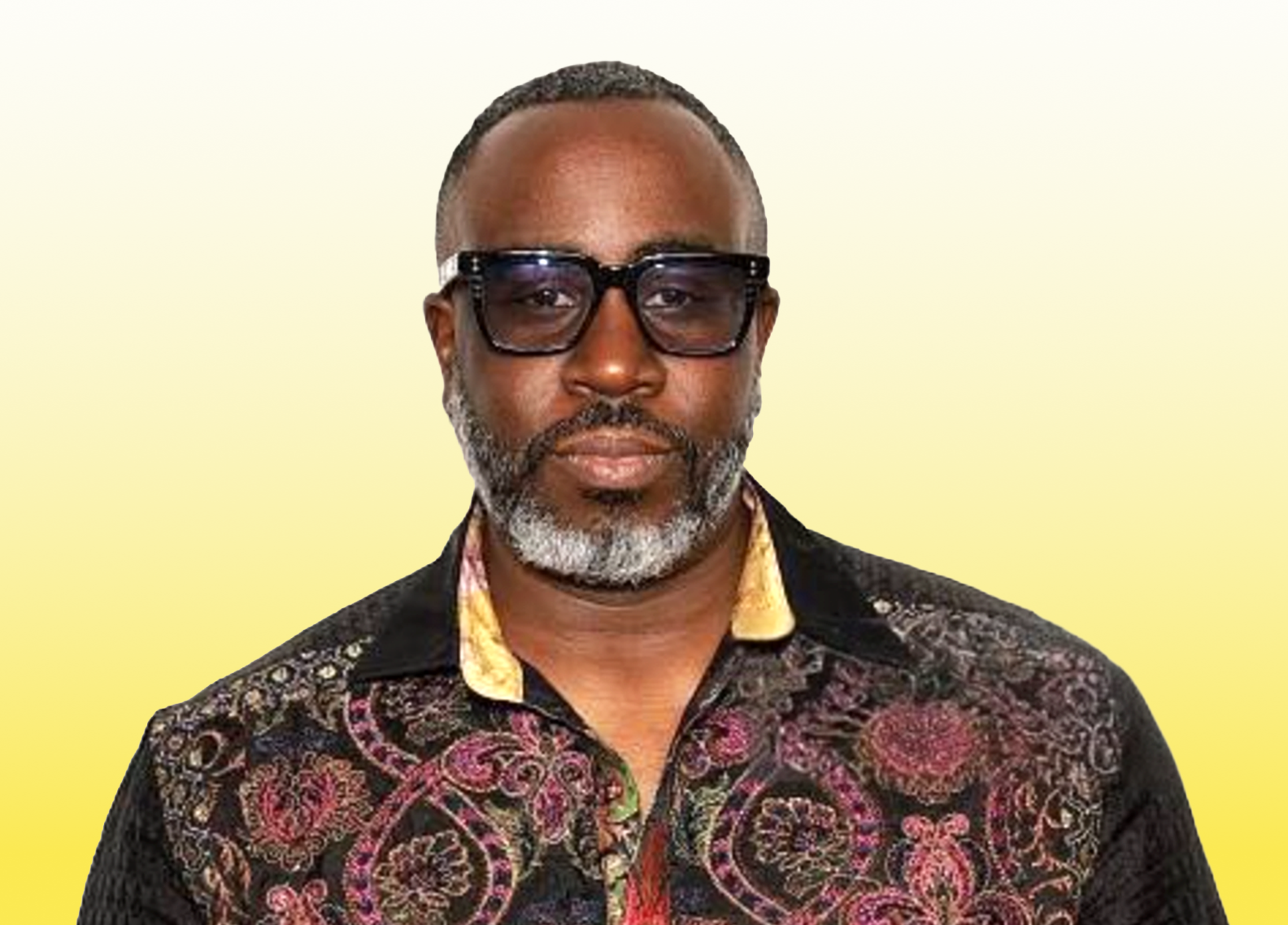
Hosted by Chenjerai Kumanyika
Chenjerai Kumanyika is an assistant professor at NYU’s Arthur L. Carter Journalism Institute. Alongside his scholarship and teaching, and service on the intersections of social justice and media, Kumanyika specializes in using narrative non-fiction audio journalism to critique the ideology of American historical myths about issues such as race, the Civil War, and policing. He is the creator, executive producer, and host of Empire City; co-executive producer and co-host of the Peabody Award–winning podcast Uncivil; and a collaborator on Scene on Radio’s Seeing White series.
Learn More
MODERATED by Matt Katz
Matt Katz is a journalist, author, and podcast producer based in Philadelphia. He worked for more than a decade as a reporter and host at WNYC public radio and NPR, covering ICE detention, law enforcement, and incarceration, and winning a Sidney Award for obtaining and publishing never-before-seen images of lethal conditions inside Rikers Island jails. Matt previously covered politics and criminal justice for The Philadelphia Inquirer, and his reporting has appeared in The New York Times, The Washington Post, and The Atlantic.
Learn More-
How the Club Works
Over four sessions (biweekly from March 31- May 19), you’ll:
- Listen to 2 podcast episodes before each session (90–120 minutes)
- Hear from special guests
- Connect history to what’s happening today
- Engage in a guided Q&A
The club will meet every 2-3 weeks:
- Week 1: Tuesday, March 31
- Week 2: Tuesday, April 14
- Week 3: Tuesday, April 28
- Week 4: Tuesday, May 19
-
WEEK 1 | Making Sense of Where We Are Now
Tuesday, March 31, 2026
Episodes 1 and 2 tell the foundational history of New York City policing, which from its infancy was not primarily concerned with keeping the public safe. The system was built to protect private property, preserve racial hierarchy, and defend the interests of the city’s elite.The throughline to our current moment is clear. Whether it’s ICE detention quotas, raids marketed as commonplace “public safety” practices, or surveillance pipelines between immigration enforcement and local police, the rhetorical devices and so-called rationale in this conversation remain very much the same centuries later.
LISTEN NOW
Episode 1: They Keep People Safe
Episode 2: If It Bleeds It LeadsDISCUSSION PROMPT
What role did fear play in justifying early policing — and who benefitted from that fear?OPTIONAL READING
The Kidnapping Club: Wall Street, Slavery, and Resistance on the Eve of the Civil War by Jon Wells -
Week 2 | How We Got Here & What’s Keeping Us Here
Tuesday, April 14, 2026
Episodes 3 and 4 trace how political ambition, racial conflict, and the growing power of the police shaped the policing we have come to know today.These patterns are still visible today — from militarized responses to protests, to SWAT deployments in communities of color, to political leaders rallying around “law and order” to build authority.
LISTEN NOW
Episode 3: What’s Done Can Be Undone
Episode 4: They’ve Got WeaponsDISCUSSION PROMPT
How did political leaders use the police force to expand their own power?OPTIONAL READING
Black Gotham: A Family History of African Americans in Nineteenth‑Century New York City by Carla L. Peterson -
Week 3 | What Resistance Looks Like
Tuesday, April 28, 2026
Episodes 5 and 6 explore the long history of “morality” policing, and who profited from this practice.The episodes illustrate that without structural change, law enforcement institutions will perpetuate the same patterns of exploitation, inequality, and abuse that have shaped the NYPD from its inception.
LISTEN NOW
Episode 5: The Moral Crusade
Episode 6: The Rotten OrchardDISCUSSION PROMPT
What would meaningful police accountability look like today?OPTIONAL READING
Madame Restell: The Life, Death, and Resurrection of Old New York’s Most Fabulous, Fearless, and Infamous Abortionist by Jennifer Wright -
WEEK 4 | Where Do We Go From Here?
Tuesday, May 19, 2026
Episodes 7 and 8 trace how New York’s policing strategies — including tactics rooted in colonial control and the targeting of immigrant communities — influenced law enforcement across the country.This final set of episodes shows how reform efforts often run into entrenched culture — and why meaningful safety requires structural change and community leadership.
LISTEN NOW
Episode 7: The American Problem
Episode 8: Stay Dangerous
Bonus Episode (Optional): The Fall of Eric AdamsDISCUSSION PROMPT
How do we imagine a safety system that protects people, not power?OPTIONAL READING
An Inconvenient Cop: My Fight to Change Policing in America by Edwin Raymond
Final Thoughts
Empire City gives us a deeper understanding of how policing in the United States was built – and why it functions the way it does today. By tracing a history rooted in property protection, racial hierarchy, political consolidation, fear, and surveillance, the podcast helps us see modern policing and ICE enforcement not as isolated policies, but as part of a long-standing, carefully-designed structure.
Understanding this history helps us ask better questions:
- What does real safety look like?
- Who benefits from the systems we have now?
- And what would it take to build something different — something centered on people, care, and accountability?
This club is a chance to explore those questions together.